Puppy Training for Beginners at Home: A Simple Guide to Raise a Well-Behaved Puppy
Bringing home a brand-new puppy is pure joy-right up until they mistake your favourite shoe for a chew toy. If you feel overwhelmed, take a deep breath: teaching your pup proper manners doesn’t have to drain your energy. With simple patience, clear consistency, and positive reinforcement, you can guide your furry friend toward great habits while building a lifelong bond.
With the help of puppynest you can master Puppy Training at Home. Whether you’re trying to master basic commands like “sit,” working on housebreaking, or just desperate to stop the constant jumping, Puppy Nest is here to walk you through every step.
Why Puppy Training Can Feel So Difficult
Puppies are adorable, chaotic, and completely unpredictable. One second they’re napping like angels, and the next they’re zooming across the living room or nibbling the couch cushions.
It’s easy to feel frustrated and wonder why your puppy won’t listen, when you should actually begin training, or if you’re being too harsh. But here’s the secret: your puppy isn’t acting out on purpose. They’re simply figure-out-the-world mode. They don’t need strict scolding; they need clear signals, repeated practice, and time.
That is exactly why using straightforward puppy training tips at home makes such a massive difference right from day one.
Puppy Training for Beginners: Start Simple
For proper puppy care, it is also important to understand your puppy’s nutritional needs. Check our Puppy Feeding Chart by Breed to learn more about suitable feeding amounts and breed-specific nutritional requirements. Effective puppy training for beginners at home doesn’t require expensive facilities or professional gear. Your living room, hallway, or quiet balcony is the perfect classroom.
At puppynest, we focus on helping you understand the why behind your dog’s behaviours. Good training isn’t about control or punishment-it’s about opening up a line of communication.
Instead of expecting your pup to understand complex rules all at once, weave quick, micro-lessons into your daily routine. If you’re teaching “sit,” keep the first session to just a couple of minutes. Reward them when they get it right, end on a high note, and try again later.
The Real Benefits of Consistent Training
Training goes far beyond simple obedience. It gives your puppy a sense of security because they know what to expect from you.
Regular, gentle training builds:
1. Clear Communication: Your pup learns to recognize key words and your tone of voice.
2. Safer Habits: Essential cues like “come” or “leave it” keep your dog safe in busy situations.
3. Better Home Manners: Your puppy learns acceptable boundaries for furniture, mouthiness, and house rules.
4. Stronger Connection: Fun training sessions deepen the personal trust between you two.
5. Real-World Confidence: Predictable routines help nervous pups feel calm around new people and places.
Remember, progress isn’t a straight line. Some days your puppy will act like a star student, and the next day they’ll pretend they’ve never heard their own name because they found a particularly exciting sock. That’s completely normal-just laugh it off and stay consistent.
How to Train a Puppy at Home
Setting up a calm space with zero distractions gives your dog the best chance to focus. Keep things brief, light, and rewarding using these core rules:
1. Stick to One Easy Cue at a Time: Start with fundamental words like Sit, Come, Stay, Leave it, or Down. Don’t overwhelm them by introducing three new words in a single day.
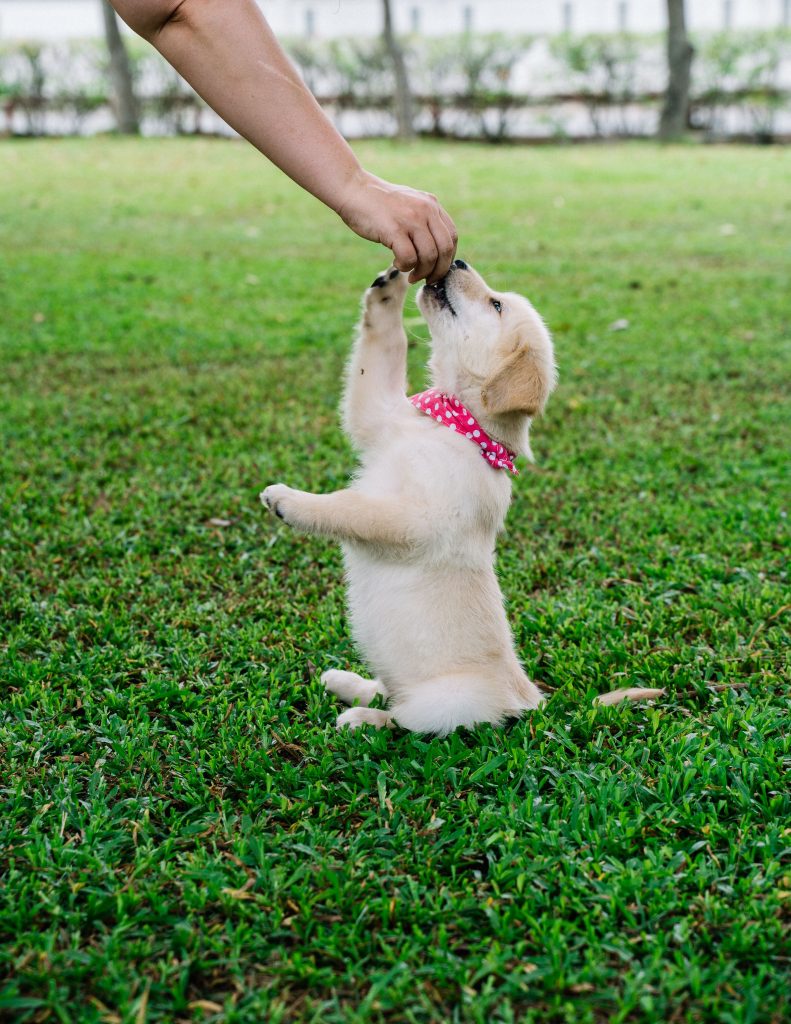
2. Reward Immediately: Mark good choices the second they happen with high-value treats, verbal praise, or a quick belly rub so your pup connects the action with the reward.
3. Keep Sessions Brief: A puppy’s focus wanes fast. Three 3-minute sessions throughout the day work much better than one exhausting 15-minute marathon.
4. Maintain Household Consistency: Everyone in your house needs to enforce the exact same rules. If jumping on the couch is banned today, someone shouldn’t allow it tomorrow.
5. Embrace the Learning Curve: Mistakes and accidents are guaranteed. Avoid getting upset—simply redirect your puppy to what they should be doing and reward that instead.
(Note: If your puppy shows signs of severe anxiety, sudden aggression, or physical distress, always consult your veterinarian or a certified behaviorist.)
How to Start Puppy Training: A Step-by-Step Approach
-> Step 1: Set the Stage: Pick a quiet, low-traffic room in your house.
-> Step 2: Isolate One Action: Pick a single focus, like teaching them to target your hand or sit.
-> Step 3: Give a Clear Command: Use a calm, distinct voice and the same cue word every time.
-> Step 4: Mark and Reward: The instant their tail hits the floor or they make eye contact, offer praise and a treat.
-> Step 5: Practice and Repeat: Work in short bursts across several days.
-> Step 6: Add Distractions Gradually: Once they master a skill in a quiet room, try practicing in the backyard or a slightly busier hallway.
-> Step 7: Stay Patient: Celebrate tiny victories rather than demanding perfection right away.
Frequently Asked Questions
When should I start training my puppy?
The moment they walk through your front door! You can start teaching basic household rules, name recognition, and simple boundaries immediately using positive, gentle methods.
Can you successfully train a puppy strictly at home?
Absolutely. The home environment is actually the best place to start because it has the fewest scary distractions, allowing your puppy to focus on learning the basics.
How long should a training session last?
For young puppies, 2 to 5 minutes per session is plenty. It’s always best to stop while your puppy is still having fun rather than waiting until they get tired or frustrated.
What should I do if my puppy ignores my commands?
Take a step back. Usually, this means the environment is too distracting, the pup is tired, or they don’t fully understand what you’re asking yet. Lower the difficulty, remove distractions, and try again with high-value rewards.
Should I use scolding or punishment for accidents?
No. Harsh corrections create fear, which actually slows down learning and damages your bond. Instead, calmly interrupt the unwanted behaviour, show them what to do instead, and reward the correct choice.
Enjoy the Journey
Raising a great dog isn’t about building a perfectly robotic pet overnight-it’s about helping a young animal make sense of your human world while building mutual trust. Some days will feel like massive wins, and other days your puppy will decide that chasing their own tail is far more interesting than listening to you.
That is all part of the process. With steady routines, plenty of treats, and realistic expectations, those tiny daily lessons will soon turn into wonderful lifelong habits.